

For a long time, warehouse optimisation followed a clear logic: improve process design, increase system precision and reduce manual intervention.
Warehouse management systems, material flow control and automation platforms were developed to execute defined workflows reliably, stabilise throughput and make operational performance measurable.
That logic remains valid, but it no longer fully explains where operational bottlenecks emerge.
In highly dynamic warehouse environments, performance losses often begin before systems formally register a deviation. A pallet remains too long at a transfer point, movements concentrate in one aisle, a handover area slows unexpectedly, while priorities shift elsewhere and resources are already tied to existing tasks. Individually, none of these developments necessarily constitutes a system error. Together, they can alter operational flow within minutes.
At the same time, warehouse performance depends on a second factor that becomes increasingly visible in daily operations: even where systems execute correctly, outcomes still rely heavily on how consistently people sustain rhythm, focus and reliability within repetitive workflows.
This means that warehouse performance increasingly depends on two conditions developing in parallel: understanding operational change before it becomes visible as formal disruption and maintaining execution quality where repetition remains structurally unavoidable.
Why operational intelligence now has to include context
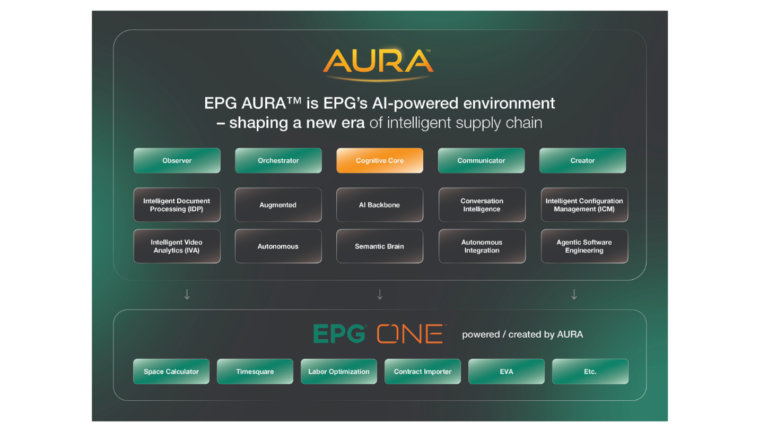
The first of these two requirements concerns visibility inside live operations: recognising when several small developments begin to influence one another before they appear as a formal deviation within the system. This is where EPG AURA becomes strategically relevant.
AURA has been developed as an AI-native environment that adds an intelligence layer above existing warehouse systems without changing their operational role. Warehouse management, automation control and transport systems continue to execute processes as before, while AURA connects operational information that would otherwise remain separated and makes emerging situations interpretable in context. At the centre of this approach is a semantic intelligence layer that links data from warehouse execution, resource deployment, process status and surrounding operational conditions into one situational view.
This creates a broader operational perspective in which changes can be assessed not only by their immediate effect, but also by their likely operational consequence. The principle already translates into practical AI-based capabilities, from contextual decision support to process-oriented communication within existing execution environments.
Why motivation has become a measurable warehouse factor
Yet even greater operational transparency does not secure stable output on its own. In many warehouse environments, repetitive work remains the dominant reality. Routes repeat, confirmations follow fixed patterns and performance depends on employees maintaining concentration over long periods without visible variation in the task itself.
Traditional warehouse software confirms whether a task has been completed but rarely makes progress tangible while work is happening. Positive reinforcement usually remains outside the process itself and appears later through reports, KPIs or supervisory feedback. That creates a visible imbalance: systems measure output precisely yet often contribute little to sustaining engagement during execution itself.
Why gamification works when it becomes part of the workflow
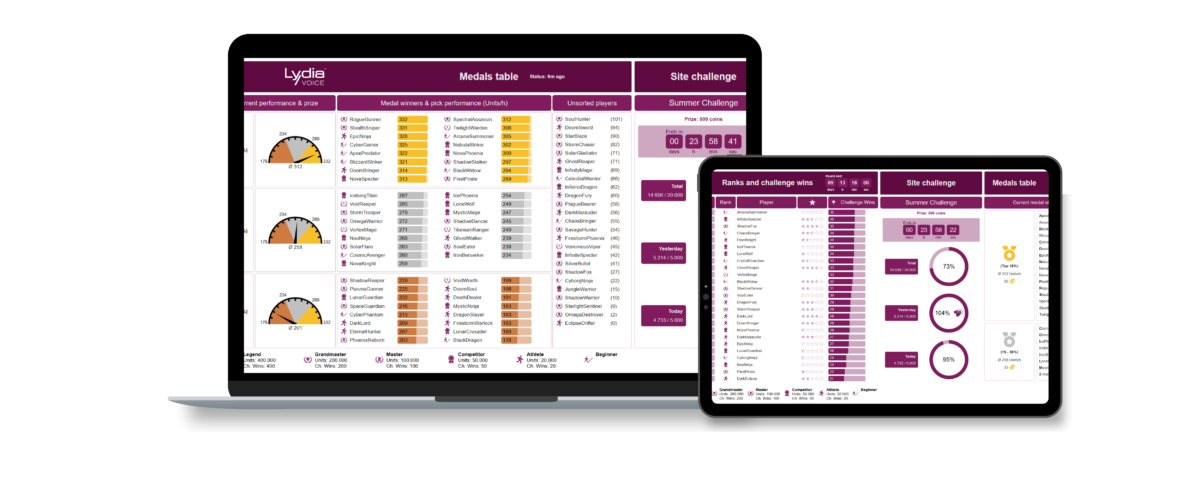
A more effective approach begins when feedback becomes part of the task itself rather than something added afterwards. With LYDIA Voice, EPG uses the existing voice-guided picking dialogue to introduce feedback directly into the natural rhythm of execution. Coins, levels, badges and team challenges are embedded into the workflow and delivered only in moments that do not interrupt concentration, particularly during walking phases between picks.
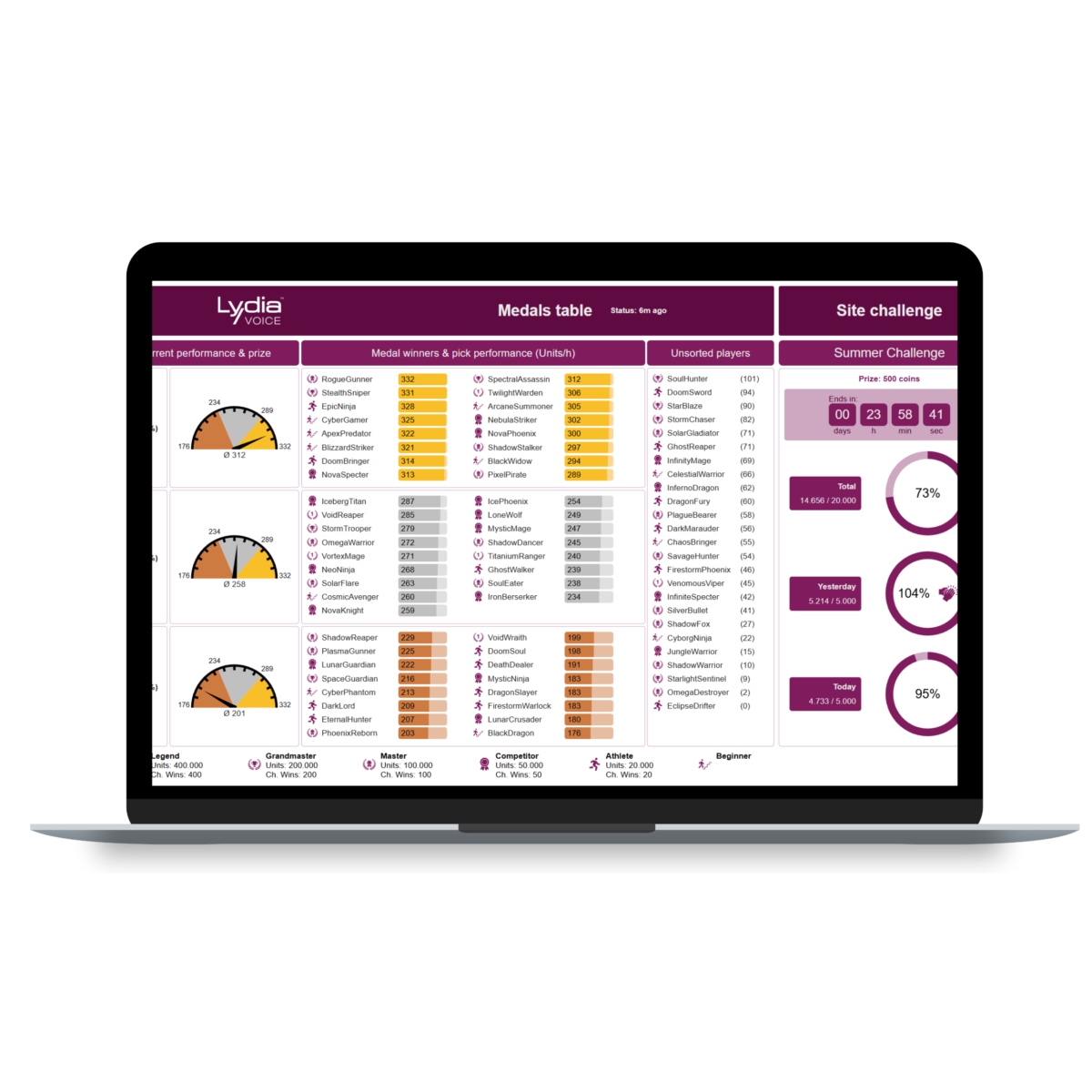
The practical effect is that progress becomes visible while work continues unchanged. Motivation is not added as a parallel activity but becomes part of the operational routine itself. This also changes how performance is perceived. Individual progress becomes tangible, while team challenges make collective contribution visible without shifting attention away from process quality. For many warehouse operations, this creates immediate practical value because even small gains in consistency and engagement become measurable across thousands of daily picks.
Extending warehouse performance where it matters most
AURA and gamification address different parts of the same operational reality: one improves how warehouse situations are understood, the other strengthens how repetitive execution remains stable over time.
To explore how these approaches can be embedded within existing warehouse environments, EPG’s specialists support a structured evaluation of operational requirements and practical implementation options.